What Is the Difference Between Light and Heavy Hydrocarbons?
مدیر سایت
20 July 2026
1 min read 56 views
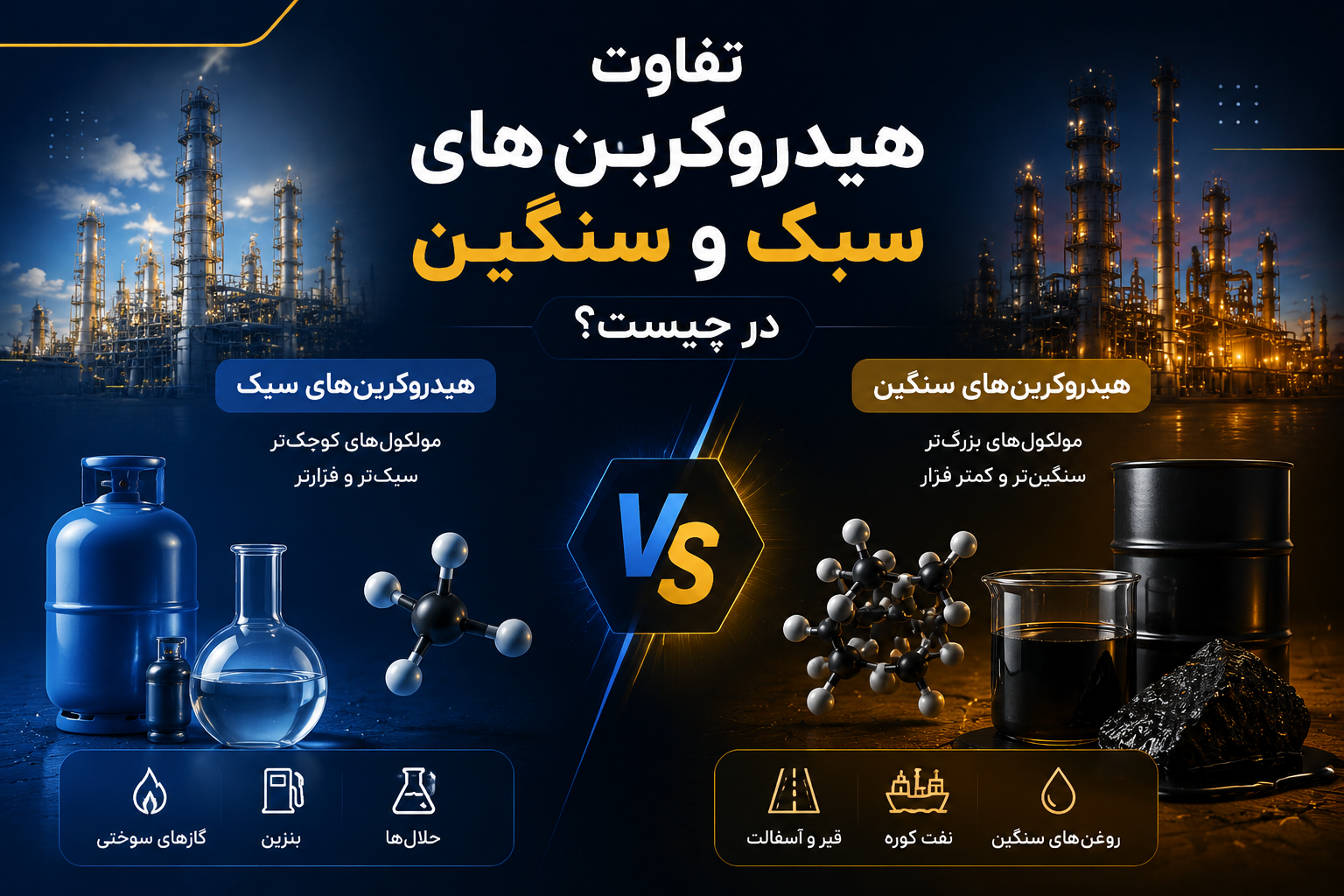
Petroleum derivatives are divided into light, medium and heavy fractions according to boiling range and molecular weight. The main difference between light and heavy hydrocarbons lies in carbon-chain length, density and boiling point.
Light Hydrocarbon
Short carbon chains, low density, high volatility and a low boiling point (below 200 °C). Mainly used as a solvent and petrochemical feedstock.
Heavy Hydrocarbon
Long carbon chains, high density and viscosity, and a boiling point above 350 °C. Used to produce fuel oil, bitumen and lubricants.
- Light: volatile, solvent, base for paints and thinners
- Heavy: viscous, industrial fuel, bitumen and oil
Related articles
Hydrocarbons & Solvents
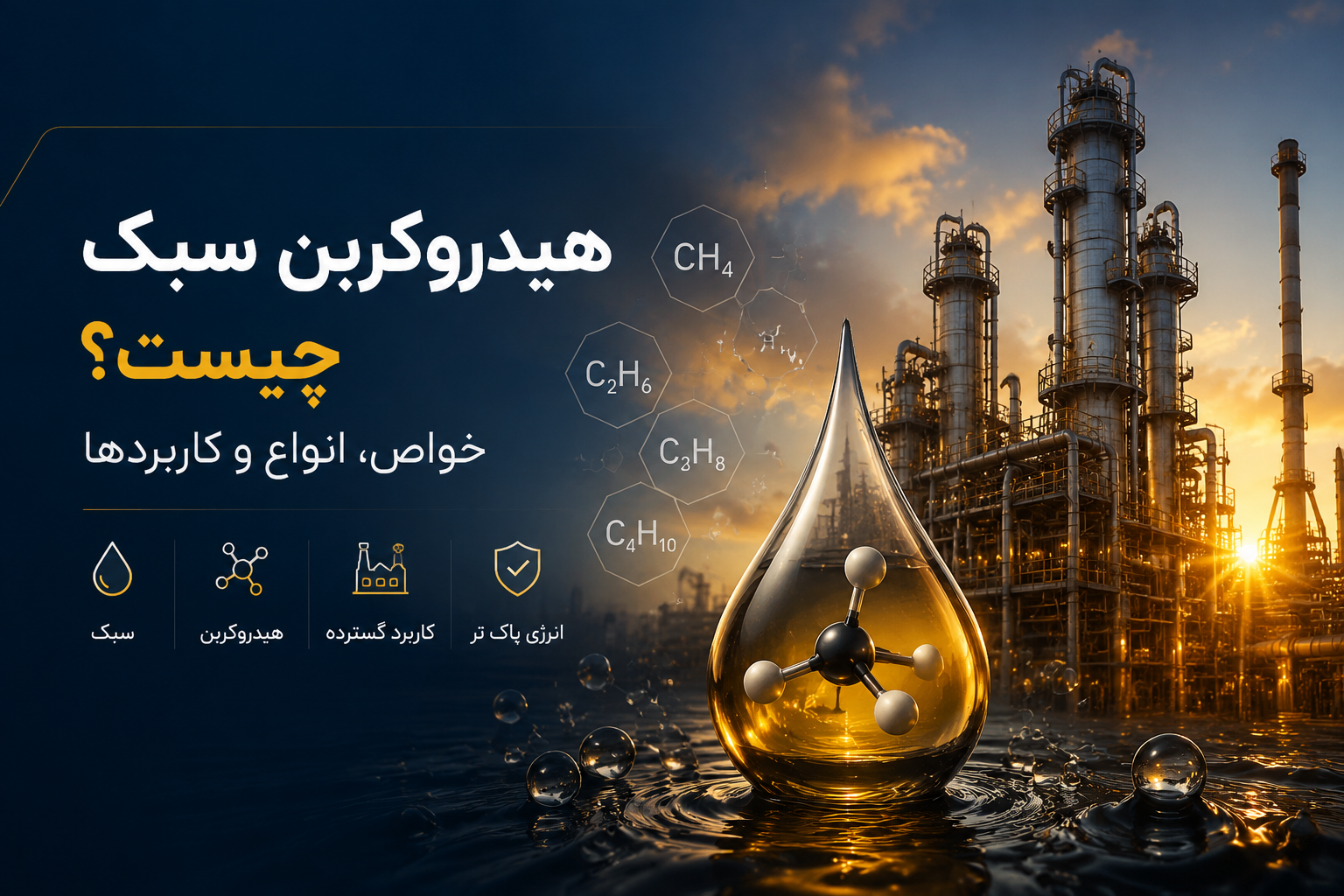
What Is Light Hydrocarbon? Properties, Types and Applications
Get to know the definition, physical properties and key applications of light hydrocarbon.
23 July 2026
1 min read